Top Industries Hiring Fire & Safety Professionals | MGIFISM
Post By : Rajani Verma
Post Date : 08 Sep 2026
Top Industries Hiring Fire & Safety Professionals
Fire and safety jobs are growing fast in India and more industries now want trained safety staff on their teams. Companies have realised that accidents cost money, time and sometimes lives, so hiring skilled safety professionals has become a priority rather than an afterthought. Students often ask which industries actually offer jobs after a fire and safety course, since this helps them plan their career path with more confidence. MGIFISM has trained many such students who now work across different sectors. This blog looks at the top Industries Hiring Fire & Safety Professionals today, so you can understand where your skills can take you and which sector fits your career goals best.
1. Construction Industry
Construction sites carry high risk every day, with heavy machines, tall structures and workers handling loads at height. This makes fire and safety staff a must-have for every construction company. Safety officers check scaffolding, monitor fall protection gear and place fire extinguishers correctly across the site. A single officer on a large project oversees hundreds of workers daily, checking helmets and harnesses. As India builds more highways and housing projects, this industry keeps hiring safety staff.
2. Oil, Gas, and Petrochemical Sector
Working with fuel, gas and chemicals brings serious fire risk, which is why this sector hires some of the highest-paid safety professionals in the country. Refineries and gas plants run 24 hours a day and even a small spark can cause a major accident if rules are ignored. Fire and safety staff handle gas leak checks, fire drills and shutdown procedures regularly. Many students trained at MGIFISM have moved into this sector after finishing advanced courses.
3. Manufacturing and Factory Units
Factories running heavy machines, chemical processes or electrical equipment need safety staff to reduce accidents on the shop floor. A safety officer checks machine guards, monitors chemical storage and trains workers on reacting during a fire or gas leak. For example, a textile factory using large boilers needs someone watching pressure levels and fire exits at all times. Since India has thousands of factories across Gujarat, Maharashtra and Uttar Pradesh, this sector offers steady job openings every year.
4. Healthcare and Hospital Sector
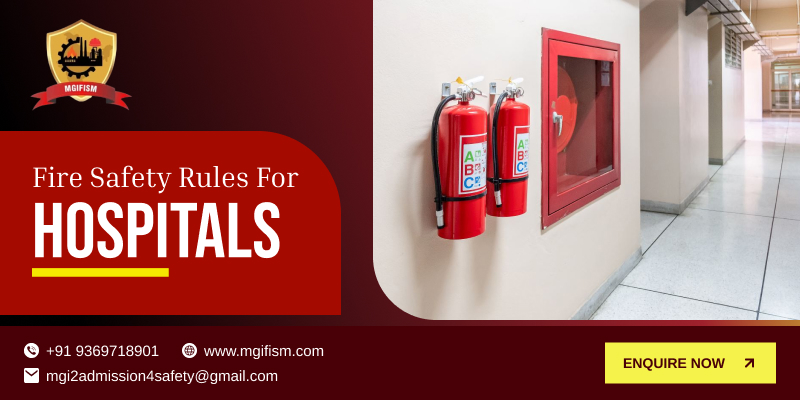
While hospitals are not an obvious choice for fire hazards, fire safety is of paramount importance due to oxygen cylinders, electrical appliances and congested departments in such facilities. Fire safety officers have been employed in hospitals with the sole objective of planning escape routes and conducting training for the personnel in case of emergencies without causing any panic. There were instances where fires occurred in hospitals during the period of coronavirus because of the oxygen equipment, pushing the sector to take safety far more seriously. This shift has opened new job roles for trained professionals.
5. Aviation and Airport Services
Airports handle fuel storage, aircraft maintenance and thousands of passengers daily, making fire safety a critical part of daily operations. Fire and safety teams at airports train to respond within minutes during any incident, since delays can be extremely costly. Ground staff, cargo handling units and fuel storage areas all need trained safety officers watching daily activities. As more airports open across smaller Indian cities, this sector is expected to hire more safety professionals ahead.
6. Hospitality and Event Management
Hotels, malls, and large event venues host thousands of people at once, which makes crowd safety and fire exits extremely important. A hotel with a large kitchen, banquet halls and multiple floors needs a dedicated safety team checking exits, alarms and lighting regularly. Even events such as concerts and huge weddings require the services of temporary security personnel. This is a rapidly growing industry that provides career opportunities in this area to people oriented professionals.
7. Mining and Heavy Industries
Mining work involves confined spaces, heavy machines and the risk of gas buildup underground, making safety training absolutely essential. Safety officers are employed by the companies to keep an eye on ventilation, gas levels and machine handling during each shift. The safety officer in mines is usually posted in a far-off place who makes sure that all workers have followed proper procedures before they move into the underground area. Mining is still one of the important industries in Jharkhand, Odisha and Chhattisgarh, this sector offers strong job demand for trained staff.
8. IT Parks and Corporate Offices
Even office buildings with no heavy machines still need fire safety planning, especially tall buildings with hundreds of employees. Safety officers are appointed by corporate companies to conduct fire drills, examine fire extinguishers and train employees about emergency exit plans. In the case of IT parks where there are many buildings, there is a separate safety officer for the whole campus. The jobs in this sector are relatively stress-free than those in the industrial sectors, good for office-based roles.
9. Warehousing and Logistics
Warehouses store many items and there are forklifts operating among stacked shelves, there is always a potential danger of fire and accidents in the premises. The safety officer will be required to inspect the layout of the storage area, the fire sprinklers and spacing among the stored items in order to prevent the fire from spreading fast. The increase in e-commerce has resulted in bigger warehouses in India and companies hire safety officers on a regular basis. This sector offers steady demand near major cities and highways.
10. Steel, Cement and Other Industrial Plants
Steel and cement plants work with extreme heat, heavy machinery and dust that can catch fire under the wrong conditions. These plants hire safety officers to monitor furnace areas, dust control systems and machine safety guards each shift. A small mistake near a blast furnace or kiln can cause serious injuries, which is why these industries invest heavily in trained safety teams. With India expanding steel and cement production, this sector stays a strong employer.
Why Are Fire & Safety Professionals in Demand?
Workplace accidents affect both the financial and reputation aspect of a company, which is why there has been an increasing trend of companies appointing safety professionals. The government regulations related to safety at work have also become stricter in many industries in recent times. Insurance companies do not provide insurance coverage without the proper safety record of a company. This mix of legal pressure, financial risk and growing awareness has made fire and safety professionals genuinely valuable across almost every sector today.
Why Enroll at MGIFISM for Your Safety Career?
Picking the right training partner shapes how ready you are for real industry jobs after your course ends. MGIFISM builds this readiness through practical, hands-on learning rather than theory alone.
- Trainers with real industry site experience.
- Courses matching actual job requirements.
- Batch timings flexible for students and employees.
- Both online and offline learning is available.
- Job placement assistance after completion of course.
- Reasonable fees without any hidden costs.
Conclusion
Fire and safety careers now reach far beyond construction sites, with hospitals, airports, malls and steel plants all depending on trained professionals every single day. MGIFISM has built its reputation on real, practical training that reflects genuine industry demand, not just classroom theory. Hundreds of students have entered these sectors with confidence, having been guided honestly by trainers who know the practical realities of field work. For any professional career guidance, you may contact us on +91-9696173637 at MGIFISM.
FAQs
1. Which industries hire Fire & Safety professionals the most?
Construction companies hire Fire & Safety professionals to manage site risks, prevent accidents, conduct inspections, and maintain emergency plans. MGIFISM helps students build practical skills for construction safety careers today.
2. Do oil and gas companies hire Fire & Safety professionals?
Oil and gas companies need safety professionals because their operations involve fire, explosions, chemicals, and high-risk equipment. Trained candidates can pursue HSE, fire safety, and emergency response roles internationally.
3. Are Fire & Safety professionals needed in manufacturing industries?
Manufacturing plants hire Safety Officers to identify workplace hazards, check equipment, train workers, and improve safe practices. Skills in industrial safety can help candidates find opportunities across many manufacturing sectors.
4. Do hospitals hire Fire & Safety Officers?
Hospitals need fire and safety staff to protect patients, employees, equipment, and buildings. Safety professionals help with emergency planning, fire prevention, inspections, drills, and workplace risk control and visitors daily.
5. Are there Fire & Safety jobs in power plants?
Power plants offer fire and safety career opportunities because electrical equipment, fuel, machinery, and industrial processes can create serious hazards. MGIFISM training helps learners understand risks, inspections, emergency systems, and safety.
6. Do airports hire Fire & Safety professionals?
Airports hire fire and safety professionals for emergency response, fire prevention, evacuation planning, inspections, and workplace safety. Candidates with suitable training can explore roles in aviation and airport operations effectively.
7. Are Fire & Safety professionals needed in warehouses and logistics?
Warehouses and logistics centres need safety professionals to manage storage risks, loading areas, fire prevention, emergency procedures, and worker safety. Demand can grow with expanding logistics and distribution operations today.
8. Do hotels and malls hire Fire & Safety Officers?
Hotels, malls, and commercial buildings hire safety professionals to manage fire protection, emergency exits, evacuation drills, inspections, and public safety. MGIFISM offers training that supports careers in these areas effectively.
9. Are Fire & Safety jobs available in chemical industries?
Chemical and petrochemical industries need trained safety professionals because hazardous substances, pressure systems, and flammable materials require careful risk control. Safety staff help prevent incidents and maintain workplace procedures effectively.
10. Is Fire & Safety a good career for mining jobs?
Mining companies require safety professionals to manage equipment risks, hazardous areas, emergency response, inspections, and worker protection. Candidates with industrial safety training can explore opportunities in mining operations today too.
11. Can freshers get Fire & Safety jobs?
Yes, freshers can enter Fire & Safety careers after suitable education and practical training. MGIFISM helps learners understand workplace hazards, emergency procedures, inspections, and essential safety practices for entry-level roles.
12. What jobs can I get after a Fire & Safety course?
Fire & Safety professionals can work as Safety Officers, Fire Safety Officers, HSE Officers, Safety Supervisors, Fire Inspectors, Safety Engineers, and Emergency Response professionals across different industries and workplaces today.
13. Which industries have the highest demand for Fire & Safety professionals?
Demand is strong in high-risk sectors such as construction, oil and gas, manufacturing, power, chemicals, mining, infrastructure, and logistics. Healthcare, aviation, hospitality, and facilities also need safety professionals with MGIFISM.
14. What skills are required for Fire & Safety jobs?
Employers commonly look for safety knowledge, hazard identification, emergency response, communication, inspection skills, risk assessment, documentation, and practical training. MGIFISM helps students develop these skills for better career opportunities today.
15. How can I contact MGIFISM to start a career in Fire & Safety?
You can contact MGIFISM at +91-9696173637 to learn about courses and opportunities today. Fire & Safety training can help students prepare for careers through relevant education, practical learning and career guidance.



 Request a Callback
 Call Us
 WhatsApp