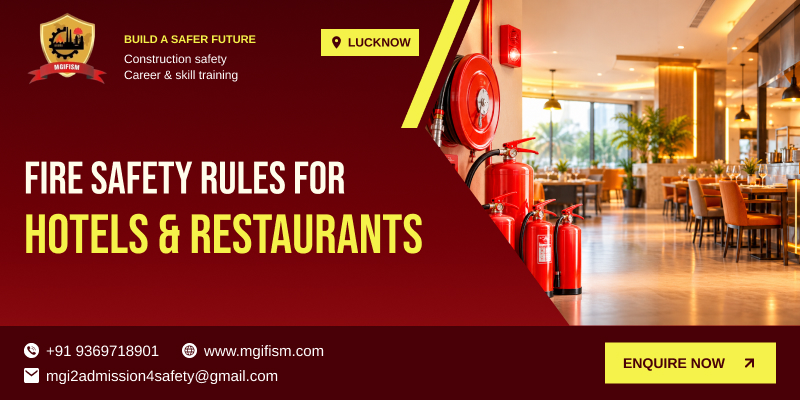
Fire Safety Rules for Hotels & Restaurants
Post By : Rajani Verma
Post Date : 12 Oct 2026
Fire Safety Rules for Hotels & Restaurants in India - MGIFISM
Every year, we hear sad news about fires in hotels and restaurants. Most of these fires start from small mistakes. A leaking gas pipe, an old wire or a blocked exit can turn a small spark into a big disaster.
The good news is that most fires can be stopped. At MGIFISM, we believe that every owner and staff member can learn the rules and follow them every day. This guide explains the main fire safety rules in easy words.
Why Fire Safety Matters So Much
Hotels and restaurants are busy places. Many guests are inside at the same time. Some are sleeping, some are eating, and many do not know the building. If a fire starts, they will not know where to run.
Kitchens add more risk. They have gas, hot oil, open flames and electrical machines, all in one small space. This is why fire safety is not just a legal task. It protects lives and your business.
1. Get the Fire NOC
In India, most of the hotels and restaurants require a Fire No Objection Certificate (NOC) from the local fire department.The rules depend on your state, your city and the size of your building. Always check with your local fire office to know what applies to you.
Keep your NOC valid and renew it on time. Do not wait for an inspection to remind you.
2. Follow the National Building Code
The National Building Code of India (NBC) clearly defines the fire safety requirements for buildings. It includes requirements about exits, staircases, fire alarms, water supplies, sprinkler systems, etc. Your building needs to comply with the above requirements and future changes should also conform to these requirements.
3. Keep Fire Extinguishers Ready
Every hotel and restaurant must keep working fire extinguishers in the right places. Here is a simple guide:
- ABC type works on most common fires, such as paper, wood and electrical fires.
- CO2 type is good for electrical equipment.
- Wet chemical type is made for oil and fat fires in the kitchen.
Never use water on an oil fire or an electrical fire. It can make things worse. The MGIFISM team always says that an extinguisher is only useful if it is checked every month and your staff know how to use it.
4. Install Smoke Detectors and Fire Alarms
A fire alarm gives early warning, and early warning saves lives. Place smoke detectors in rooms, corridors, kitchens and storage areas. Test the system often. A broken alarm is as bad as no alarm.
Hotels should also have a loud alarm that can be heard in every room, even with the door closed.
5. Keep Exits Clear and Marked
This is one of the most important rules. Fire exits must always be open, clear and easy to find.
- Never lock or block an exit door, even at night.
- Keep boxes, chairs and cartons away from stairs and corridors.
- Put bright exit signs that glow in the dark or have backup power.
- Fix an evacuation map on every floor and inside every hotel room door.
Guests should be able to leave the building in a few minutes, even in smoke.
6. Use Emergency Lights
During a fire, the power often goes off, and the building can become dark and full of smoke. Emergency lights and backup batteries help people see the way out. Check them every single month, because batteries wear out over time.
7. Keep the Kitchen Safe
The kitchen needs special care. Follow these simple habits:
- Check gas pipes and cylinders for leaks. Keep cylinders upright in a well-aired place.
- Clean the chimney and exhaust often. Grease collects there and catches fire easily.
- Never leave hot oil or a lit stove alone.
- Keep towels, paper and plastic away from the flame.
- Turn off the gas at closing time.
8. Check the Electrical System
Many fires start from short circuits. Do not overload sockets with too many machines. Change the wire and use good quality switches and MCBs. Ask a licensed electrician to check your wiring once a year to keep everyone safe.
9. Train Your Staff
Equipment alone cannot protect you. Your staff must know what to do. MGIFISM trains teams to:
- Raise the alarm quickly.
- Call the fire brigade on 101 (or 112).
- Use an extinguisher.
- Guide guests calmly to the exit.
- Gather at a safe assembly point.
Hold a fire drill at least twice a year. Practice builds confidence, and confident staff stay calm in real danger.
10. Keep Records
List all inspections, refills of fire extinguishers, fire drills, and repairs in a basic register. Such entries prove that you care about safety and are useful during official inspections. They will also remind you of your next service date.
A Simple Real-Life Example
Imagine a small restaurant where the cook leaves a pan of oil on the stove and steps out for a minute. The oil catches fire. If a wet chemical extinguisher is nearby and the staff are trained, the fire is put out in seconds. If not, the flames can reach the ceiling, and smoke can fill the dining hall. The only difference is preparation.
Why Choose MGIFISM for Fire Safety Rules for Hotels & Restaurants?
MGIFISM helps hotels and restaurants stay safe with simple fire safety guidance, practical training and honest advice. We provide rules in simple language for your people to be quick in action.
- Simple guidance in easy words.
- Staff training with real examples.
- Help with Fire NOC and local rules.
- Checks for exits, alarms and kitchens.
- Clear advice that fits your budget.
- Quick support when you have questions.
Choose MGIFISM today and give your guests and staff a safer place.
Conclusion
Fire safety is not a one-time job. It is a daily habit. Keep your exits open, check your fire equipment often, train your staff and stay alert at all times. A little care today can save many lives tomorrow. Do not wait for an accident to happen. Ready to make your hotel or restaurant fire safe? Contact MGIFISM at +91-9696173637 now to start on your way to a safer enterprise.
FAQs
1. What are the fire safety rules for hotels and restaurants?
Hotels and restaurants must have a fire NOC, working extinguishers, smoke alarms, clear exits, emergency lights, safe wiring and trained staff. Follow the National Building Code and local fire rules.
2. Is a fire NOC needed for a hotel or restaurant?
Yes. Most hotels and restaurants in India need a Fire NOC from the local fire department. Rules differ by state and building size, so check with your local fire office.
3. How do I get a fire NOC for my restaurant?
Apply to your local fire department with building plans, safety equipment details and ID papers. An officer inspects the place. MGIFISM can guide you through each step in simple words.
4. Which fire extinguisher is best for a restaurant kitchen?
A wet chemical extinguisher is best for kitchen oil and fat fires. An ABC type works for common fires. Never use water on oil or electrical fires; it spreads flames.
5. How often should fire extinguishers be checked?
Check fire extinguishers every month and service them yearly. Refill them before the expiry date. Keep them near exits. Make sure every staff member knows how to use them well.
6. Where should smoke detectors be placed in a hotel?
Place smoke detectors in guest rooms, corridors, kitchens, storage rooms and near stairs. Test them often. A loud alarm should be heard in every room, even with the door closed.
7. How many fire exits should a hotel have?
The number depends on your building size, floors and guest count. Every floor needs at least two clear exit routes. MGIFISM can review your building plan and advise you correctly.
8. What should staff do when a fire starts?
Raise the alarm, call 101 or 112, and guide guests calmly to the nearest exit. Use an extinguisher only if the fire is small. Gather everyone at the assembly point.
9. How often should hotels do fire drills?
Hotels and restaurants should hold a fire drill at least twice a year. Regular practice helps staff stay calm. MGIFISM trains teams with real examples so everyone knows the steps.
10. How do I prevent kitchen fires in a restaurant?
Check gas pipes for leaks, clean the chimney and exhaust often, never leave hot oil alone, and keep cloth and paper away from flames. Turn off the gas at night.
11. Are emergency lights and exit signs required?
Yes. Emergency lights and glowing exit signs help guests find the way out when power fails or smoke fills the building. Check the backup batteries every month so they work.
12. What causes most fires in hotels and restaurants?
Most fires start from gas leaks, hot cooking oil, short circuits, overloaded sockets and unattended stoves. Regular checks and trained staff can stop most of them before they spread widely.
13. What is the fine for not following fire safety rules?
Penalties depend on your state and the violation. You may get a notice, a fine, or even a sealed property. Ignoring fire safety can cost lives. Always check local rules.
14. Why choose MGIFISM for fire safety help?
MGIFISM is a trusted choice for hotels and restaurants. The team gives simple guidance, practical staff training and honest advice on rules, Fire NOC, alarms and exits at fair prices.
15. What is the MGIFISM contact number for fire safety help?
Call MGIFISM today on +91-9696173637 with your hotel or restaurant details. The team will explain the rules, answer your questions and guide you on every next step in simple words.





 Request a Callback
 Call Us
 WhatsApp