Emergency Evacuation Plan Kya Hai?
Post By : Rajani Verma
Post Date : 15 Oct 2026
What Is an Emergency Evacuation Plan? Importance, Steps, Checklist and Safety Rules
Emergencies may occur anytime, irrespective of whether it is happening at an office, factory, school, hospital, or any other residential place. The presence of an evacuation safety plan makes it easy for people to get out of the hazardous environment. An Emergency Evacuation Plan provides details about the response plan, the exit route to be taken, and the gathering point after exiting the building. Knowing about an Emergency Evacuation Plan is necessary in order to enhance safety and prepare for any unforeseen event.
What Is an Emergency Evacuation Plan?
Emergency Evacuation Plan means an instruction in writing about the process of leaving a building in case of a fire, an earthquake, gas leakage or any other situation of emergency. The plan indicates the exit points, emergency points, assembly points and the duties of individuals involved in the evacuation process. Knowledge about the Emergency Evacuation Plan is essential for building owners and employees to ensure that they are prepared for emergencies in advance.
Why Is an Emergency Evacuation Plan Important?
A well-crafted evacuation procedure allows people to react effectively when there is a threat. Without proper directions, people can get scared and take inappropriate measures or waste precious time finding their way out. With a good Emergency Evacuation Procedure, people become less confused and know where to go to be safe. It will also help the safety teams find out if all the people have been evacuated from the premises. Proper Workplace Emergency Preparedness can increase awareness among employees and help to make better decisions in case of an emergency.
When Is an Emergency Evacuation Plan Required?
An evacuation plan is helpful wherever there is a need for fast evacuation of people due to an element of danger. Different offices, industrial establishments, schools, hospitals, commercial centres, hotels, and residential properties will have different evacuations to undertake based on the nature of operations carried out. Fire evacuation plans are particularly essential in premises that use electrical devices, machines, cooking, and flammable materials which pose fire hazards. Emergency Response Plans are meant for addressing all kinds of other emergencies, including gas leaks, earthquakes, chemical spills, and security issues, among others.
What Are the Key Elements of an Emergency Evacuation Plan?
An ideal emergency plan would have to contain an excellent guidance system, effective evacuation routes, and assistance to ensure the safe evacuation of all people. All of these should be suitable in relation to the building structure, number of occupants, and risks involved. The main elements of an Emergency Evacuation Plan include:
- Emergency exits
- Escape routes
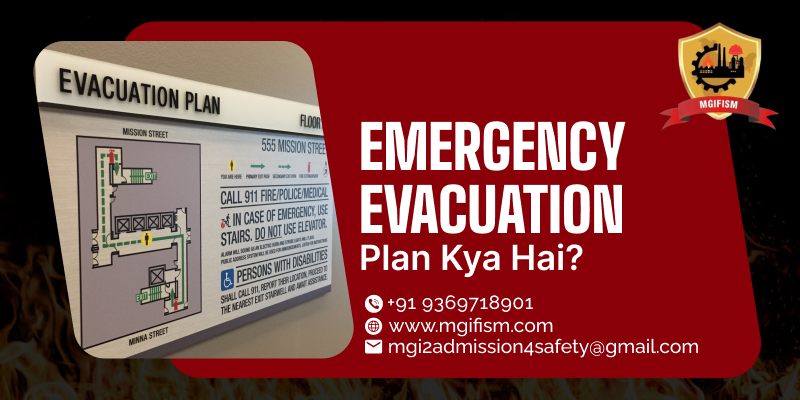
- Emergency evacuation map
- Fire alarm and warning system
- Assembly points
- Emergency contact numbers
- Evacuation team duties
- First aid provisions
- Provision for assistance of disabled people
- Emergency communication procedures
- Headcount provisions for occupants
- Training and drill exercises
All these components must be reviewed periodically to ensure that they are still appropriate and accessible.
How to Prepare an Emergency Evacuation Plan Step by Step
Making a plan of evacuation entails the knowledge of the structure, its occupants, and the potential risks faced. Building management and safety personnel must work together to come up with guidelines that will be used in case of emergency. The following procedure will be helpful in making an effective Emergency Evacuation Plan for Workplace:
- Identify the hazards: This involves identification of fire hazards, electrical hazards, chemical hazards, etc.
- Selecting the routes: This includes selecting safe routes and alternative exit points.
- Assembly point selection: This means selecting assembly points that are safe and out of the building and the emergency access route area.
- Task allocation: This means allocation of tasks to people to provide warnings, guide people, and find missing people.
- Preparation of evacuation chart: Involves marking the exits, escape routes and assembly points.
- Setting communication procedures: Involves setting ways of sending out the warnings and instruction messages.
- Training: Involves explaining the procedures and conducting drills.
What Is the Emergency Evacuation Procedure During a Fire or Other Emergency?
Properly following the Emergency Evacuation Procedure will assist individuals in escaping from the dangerous location. All persons need to know about the warning signals, exit points, and guidance provided by the emergency response team. In the case of fire, individuals need to consider their safety first before taking care of anything else, including trying to save their personal belongings.
- Raise the alert: Press the alarm button or inform the relevant person when you can do so safely.
- Cease work: Leave the equipment behind, if possible without affecting the evacuation process and causing any harm to other individuals.
- Escape through the exits: Follow the escape path and use stairs instead of elevators in case of fire.
- Stay away from the smoke: Crouch down and use another safe way if there is smoke.
- Go to the assembly point: Go to the designated assembly point.
- Report missing people: Inform the emergency staff about your findings.
- Wait for additional instructions: Do not attempt to re-enter the building unless you receive permission from the authorities.
Emergency Evacuation Plan Checklist for Buildings and Workplaces
A routine Emergency Evacuation Plan Checklist would be useful for identifying any issues that may arise before the emergency occurs. This document could be reviewed by safety officers, facility managers, and building owners during their inspections. The checklist should ensure the following: the state of the exits, alarms, emergency lighting, signs, and communication devices; the fact that staff members understand their responsibilities; and proper arrangements for those who need help. The complete checklist on Workplace Emergency Preparedness should include the following items:
- Emergency exits are accessible and clear.
- Escape routes are clearly marked.
- Fire alarms and emergency lights are operational.
- Evacuation map is present and up to date.
- Assembly area is clearly indicated.
- Contact numbers are up to date.
- Fire safety equipment is inspected.
- First aid is available.
- Training and drills are conducted.
- Arrangements for people with special needs are made.
Emergency Evacuation Plan for Offices, Factories, Schools and Hospitals
Since each structure is unique in its occupants, the work done, and its risk factors, different evacuation plans will be necessary for different structures. When formulating an Emergency Evacuation Plan for Workplace, one will need to take into consideration the number of people involved, machines present in the workplace and the hazards associated with such places. Factories may have specific evacuation plans due to the hazards that are present there. Schools should have easy-to-understand instructions that can be followed by children with assistance from teachers. Hospitals should formulate plans to cater for patients who cannot walk alone.
What Is the Role of a Fire Safety Audit in Emergency Evacuation Planning?
A fire safety audit is the process of assessing the appropriateness, maintenance, and compliance of the fire safety arrangements within a building. Such an audit can help identify any blockage of exits, inadequate signage, problems with emergency lighting, and other factors that can hamper the evacuation process. A Fire Safety Audit will also be useful in helping organizations assess the areas where they need to make improvements. Fire safety advice provided by professional fire safety organizations like MGIFISM will be beneficial for individuals to learn more about fire safety practices.
What Is an Emergency Evacuation Drill and How Is It Conducted?
An Emergency Evacuation Drill is an exercise carried out to teach individuals what to do when there is an alert or emergency warning signal. This is done to ensure that everyone is knowledgeable about the way out during such circumstances. Prior to the exercise, the relevant team should brief individuals on how to conduct themselves during an emergency evacuation drill and arrange for those who need assistance. During the exercise, participants follow the route specified and meet at the specified point. Afterwards, the team reflects on any delay or confusion experienced during the exercise.
Emergency Evacuation Plan Rules and Safety Requirements in India
Fire safety and workplace fire safety requirements in India may be regulated by the state laws, fire service requirements, use of the building, occupancy, and applicable codes and standards. Therefore, Emergency Evacuation Rules in India must be reviewed taking into account the applicable building and local authority requirements. It is important not to make an assumption that the same requirement applies to all properties.
- National Building Code: Check the fire and life safety provisions from the National Building Code of India.
- State and Local Laws: See what is mentioned about fire safety laws in state and local authorities.
- Building Approvals: Check fire approvals and Fire NOC and all other approvals for the particular building.
- Workplace Safety: Check the applicable occupational safety rules according to the particular workplace.
- Emergency Plan: Check the proper procedures, safety signs, and evacuation procedures according to the applicable requirements.
- Training and Drills: Arrange training and drills wherever such activities are necessary.
- Documentation: It is important that there is always proper documentation available.
The owners need to notify the fire department concerning fire safety regulations.
Common Mistakes to Avoid in an Emergency Evacuation Plan
A perfectly executed plan will still be unsuccessful if people lack awareness or there are poor safety preparations. Reviews may come in handy for an organisation to spot and sort out such issues. There is a checklist for an Emergency Evacuation Plan that may assist one in identifying any lapses in the process.
- Blocked exits
- Confusing signs
- Old maps
- Insufficient training
- Lack of assembly points
- Neglected drills
- Absence of assistance plans
- Poor communication
Avoiding such pitfalls makes evacuation planning much more realistic and viable.
Who Is Responsible for Preparing and Implementing an Emergency Evacuation Plan?
Responsibility for evacuation planning will typically lie with the owners of the building, the employer, the managers of the facility, or the assigned safety personnel, based on the location and its requirements. The people involved will have to see to it that the escape pathways stay unblocked, the alarms are properly functioning, and the occupants know how to behave in times of emergency. The safety officer or the emergency response team members can be responsible for doing all these activities. The employees and others occupying the building must be responsible enough to follow the instructions and alert about any potential dangers.
Conclusion
It is essential that an evacuation plan is put in place that clearly explains how individuals can behave themselves in case of fire or other emergencies. Finding the escape routes, choosing the assembly points, identifying exits and allocating responsibilities are some of the key elements of preparation. It must also be noted that an Emergency Evacuation Plan must be revised whenever there are changes in hazards or layout of the building. Individuals must make sure that safety criteria are fulfilled and address any shortcomings found during inspection. The MGIFISM promotes fire safety awareness and knowledge among those who are interested in fire safety of their workplace/building. For more information about the services/training, contact us at +91-9369718901.
FAQs
Q. What is an emergency evacuation plan in simple words?
A. An emergency evacuation plan is a set of instructions that guides people to leave a building safely during a fire, earthquake, or other emergency.
Q. What should an emergency evacuation plan include?
A. An emergency evacuation plan should include exit routes, emergency alarms, evacuation maps, assembly points, emergency contacts, assigned responsibilities, and arrangements for people who need additional assistance.
Q. What are the five steps of an emergency evacuation plan?
A. The five main steps are identifying hazards, selecting escape routes, choosing assembly points, assigning responsibilities, and training people through regular emergency evacuation drills.
Q. Is an emergency evacuation plan mandatory in India?
A. Requirements depend on applicable state laws, local fire safety rules, building type, and occupancy. Building owners should consult relevant authorities to confirm their specific obligations.
Q. How often should emergency evacuation drills be conducted?
A. Evacuation drills should be conducted at intervals required by applicable regulations and workplace safety procedures. Regular practice helps occupants understand exit routes and emergency responsibilities.
Q. What is the difference between an evacuation plan and an emergency response plan?
A. An evacuation plan focuses on safely leaving a dangerous area, while an emergency response plan covers broader actions, including alarms, communication, emergency services, and incident management.
Q. What is the purpose of an emergency evacuation map?
A. An emergency evacuation map shows escape routes, emergency exits, assembly points, and important safety locations, helping occupants understand how to leave a building during an emergency.
Q. Who is responsible for workplace emergency evacuation?
A. Employers, building managers, and designated safety personnel generally coordinate workplace evacuation arrangements. Employees must follow instructions, use safe exits, and report hazards when necessary.
Q. What should employees do during an emergency evacuation?
A. Employees should remain calm, follow alarm instructions, use the nearest safe exit, avoid lifts during fires, reach the assembly point, and wait for further instructions.
Q. How does a fire safety audit improve an emergency evacuation plan?
A. A fire safety audit identifies blocked exits, faulty alarms, poor signage, and other safety gaps, helping organisations improve evacuation arrangements and meet applicable fire safety requirements.




 Request a Callback
 Call Us
 WhatsApp